Archive

Archive for the ‘Social Media’ Category

Google i/O 2013 top announcements: Android, Search, Photos, Social … and Robots.

May 16th, 2013 1 comment
google i/o 2013 announcement top

top announcements google i/o

Equipped with a Red Bull and a bowl full of popcorns, I had a chance to watch the three-hour-long Google I/O keynote yesterday. The event I wait with excitement every year was full of quite interesting announcements – or should I say “improvements” – especially in Google’s key areas of business for consumers and developers.

Unstoppable Android & Android Studio – Google I/O 2013

The keynote started with interesting news about Google’s Android OS, with company stating there had been 900 million activations of Android devices. Great.

Now to the best part: Google announced a new tool for developers called ”Android studio”, which provides more options for Android devs to play with, making the process faster and more productive. It surely looks great and I have to say I’m excited about the beta tester, localization and tracking possibilities. Can’t wait to use it myself!

Google Conversational Voice Search – Google I/O 2013

I’m not sure if this is “end of search as we know it” as it already exists on Android phones, but it is surely very interesting addition to a desktop search. The company announced in Google I/O 2013 that the conversation-like voice search is now moving from Android mobiles also to users’ computers through Chrome, giving people a new search experience where no typing is required.

Don’t be deceived – this is not like Apple’s Siri. It is much better. Why? The real power behind this search function is not in the voice recognition technology itself, but in Google’s data backend and what it knows about you. Apple might have a similar technology, but Google simply knows much more about you -  especially if are signed in to Google and Google+. This gives you a truly personal and relevant “conversation” experience (which can be sometimes scarily accurate…)

It will be interesting to see whether Google will add option “voice search” in their AdWords target options.

Google Photo – Google I/O 2013

Google is also improving its photo services in Android and Chrome with a cool feature allowing it to automatically create a photo album from hundreds of images uploaded to your photo cloud storage. Google picks the best photos based on aesthetic and image quality, landmark locations, friends and family members recognition, and it even checks whether people are smiling or not! It also disqualifies duplicates, blurry and under/overexposed images.

Social Media: Improved Google+ – Google I/O 2013

Whether you like Google+ or not, its new look and feel is eye-catching. I personally think the way posts are presented is more clear, more attractive and reading and posting in the platform is much more user-friendly.  The new dynamic display does not only allow you to have up to three columns, but you can choose whether you want to show your content in 1,2 or 3 columns. One to watch, as Facebook is moving to a sales focused format in their platform alienating especially younger generation. Watch out Facebook – Google Plus is finally starting to look sexy!

Mixing Social and Search?

Google also introduced a new feature called ‘Related Hashtag’, which allows Google to automatically add its own hashtags to your posts based on the text within your post. What comes to images, by using a new feature called “Image analysis” Google is able to analyze your image and decide whether there is any recognisable content in it. And then add an hashtag such as #Rome. Quite #cool.

If it is too much for your privacy conscious brand / mind, you can opt out for one post or all of them quite easily.

And of course …

… robots fighting with light sabers. How could anyone possibly not like that? :)

In action: http://techcrunch.com/2013/05/15/willow-garage-pr2/

Social Media: Facebook IPO Fiasco – Is It Time to Make Users Pay?

May 30th, 2012 No comments

Facebook New Zealand testFacebook has a lot to prove. The much hyped Facebook IPO turned to be a fiasco, as the company and bankers evaluated the social network to be worth $100 billion while investors did not. Despite the little peak ($45 share) during the launch on May 18th 2012,  the Facebook share price has dropped from the opening price of $38 to about $28 this morning.

So, what went wrong?

Too high and optimistic expectations

First of all, let’s look at the numbers. There is an impressive quantity of users in Facebook and the social network has been predicted to reach billion users this year. But does it justify that Facebook was being valued at almost 100 times last year’s profits? This is much higher than tech companies Apple and Google, who in fact make much more money.

In addition to above, in February 2012 Facebook admitted that it did “not currently directly generate any meaningful revenue” from mobile even if more than 425 million monthly active users, representing 50% of the total MAUs, were utilizing its mobile products in December 2011. This has serious implications, which probably were not bypassed by the investors.

What comes to the launch itself, there were too many shares in the market. Also it did not help either that Facebook insiders, such as Facebook board member Peter Thiel, increased the amount of shares they wanted to sell. This raised suspicions – what did they know, that normal public did not?

Is it time to make Facebook users pay?

Facebook has launched a test in New Zealand to see whether it would be possible to make profit also with the users. According to CNET, the social media platform has recently tested out a new service that permits users to make their status updates more prominent in exchange for some money. The new service works like the premium ads to businesses. By paying $1.80 New Zealand dollars ($1.42 U.S. dollars), Facebook users can promote their status update and assure it remains in their friend’s news feed.

If this business model would result successful, Facebook could possibly make a nice profit and gain investors’ trust back. As the user’s friend base, likes, groups, and applications grow, user’s status updates are likely to get lost in the middle of it all. Facebook users also love friends’ “likes” and comments, especially if we are talking about top influencers, and sometimes they have something important to say that is worth highlighting, such as a lost mobile or an item on sale.

On the other hand, the hidden/not seen status updates are mainly caused by Facebook’s own features, issues and sorting algorithm, that sets up the top stories as default and makes everything very cluttered. It highlights stories such as the games people play, music they listen to, apps they use and articles they read – and do not forget to add the brand communications and ads on top. The social media platform has already been pushing its luck, and it is to be seen if this will provoke users to leave the site.

To be honest, I am interested to see how this works out and what users’ reaction will be. How important showing status update is for users? How much are they ready to pay to be “liked”? And if they are ready to pay to be “liked”, are they ready to pay to access the platform in the future? Maybe this is just the first step towards a Facebook membership fee.

Social Media Trends: Pinterest in Europe – Pin it or Bin it?

April 21st, 2012 No comments

Pinterest in EuropePinterest. Surprise, surprise – another new social network everyone talks about. There is a lot of hype around the platform, but is it really necessary to invest again money, time and resources in another social network?

Yes. There is actually a very good reason why Pinterest should not be ignored: the total number of global unique visitors in Pinterest increased 2,702.2% since May 2011 reaching 11,716,000 visitors by January 2012. It has 1,36 million visitors a day.

What is Pinterest?

Pinterest is a social photo sharing network that allows people and brands to create image collections, Pinboards, based on their interests, hobbies, products, beliefs, humour, art, events and more. The idea is to connect people through the things they find interesting and get inspired by. Users are able to browse other users’ collections, re-pin images for their own Pinboard, follow other users, and like their photos. Pinterest allows users to share pins also on other social networks, which increases the social visibility.

Pinterest – user demographics and engagement

The average Pinterest user spends almost 16 minutes on the site per visit compared to 16.4 min. in Youtube, 12.1 min. in Facebook, and 3.3 min. in Twitter. Surprisingly, Pinterest provides more referral traffic to other sites than Google+, YouTube and LinkedIn combined together, and the apparel retailer referral traffic from Pinterest increased 289% between July and December 2011.

50% of the Pinterest users have children, almost 70% of Pinterest users are female, and 97% of Pinterest’s Facebook fans are women. Instead of teenagers and young adults, the platform seems to appeal most for the older age groups: largest age group is 25-34 year olds (27.4%) followed by 35-44 year old users (22.1%). Interestingly 45-54 year old users represent 17.9% of the user base, which is a high number compared to other social networks.

Pinterest in Europe

In Europe Pinterest has grown exponentially since May 2011 becoming the fastest growing social network. According to Comscore, in January 2012 the UK had the highest number of unique visitors in Europe (245,000), Germany had 67,000 unique visitors, and Spain had 62,000 unique visitors. What comes to the growth, from May 2011 to January 2012 Germany had the highest growth rate of 2956% in Pinterest, followed by Spain (1348%), and Italy (794%).

Pinterest statistics Europe 2012Even if the unique visitors decreased in France and the UK between December 2011 and January 2012, engagement on Pinterest increased by 1740% and 20%, respectively.

Is Pinterest worth investing?

Pinterest is currently the fastest growing social network in the US and Europe, and it is very interesting from a brand perspective. You have a possibility to target people according to their interests in real time without being their “friends”, provoke a stronger response with images as people are very visual, and obtain social recommendations when people “pin” or like your image. With a proper preparation, the social photo sharing platform may be very beneficial for sales,  and looking at the demographics, it is great especially if you are targeting women and more mature demographics.

How brands can use Pinterest? For example, ecommerce sites and brands can use Pinterest to pin their products (fashion, clothes, shoes, accessories, interior designs, household items, wedding items, baby products, etc), travel companies and hotels can pin location pictures, food manufacturers can pin beautiful dishes, pet food companies can pin cute animals, etc. etc. The list goes on, but as with other social networks stop and think before you start pinning. Pinterest has a lot of potential, but if not done properly the end result may not be what you expected. To be successful as a brand you need a proper Pinterest strategy to reach right people, and if you have a good strategy  – an image can be worth a thousand words.

Social Media & Mobile: Facebook Planning to Establish its own HTML5 App Store?

February 19th, 2012 No comments

With more than 425 million monthly active users utilizing Facebook mobile products in December 2011 only, the social networking platform is finally focusing on mobile and tablets in 2012. Wise decision, since not only Smartphone market is increasing, but according to a research by BI Intelligence global tablet sales will reach 500 million units per year by 2015 – exceeding the number of PCs currently sold per year (~360 million).

Facebook has mentioned that as part of its mobile monetisation strategy it will start using “sponsored stories” in mobile users news feed. But is that really all?

Facebook – more than a simple platform

Until now Facebook has been focusing on normal web strategy and constant updates that seem to make its users’ life more difficult. But hate Facebook or not, the social network is becoming much more than just a platform. Facebook is on its way to become its own Internet portal by using Facebook IDs as an online passport to various products and services hosted on its own developer platform.

Facebook’s inter-connected business model has worked well and the company has created its own successful ecosystem. The social network has made great progress especially with social gaming, and its close relationship with Zynga (FarmVille, Mafia Wars) has been very beneficial for both.  F-commerce is also blooming with companies trying to get more touchable return on their social media investment and Facebook has even launched its own online virtual currency called Facebook credits. They allow Facebook developers to offer in-app purchases with Facebook cutting 30% of the revenue. A similar model Apple uses in its App store.

Facebook mobile monetisation strategy

Now there is the problem. Facebook needs to establish a proper mobile monetisation strategy, yet the native app store model is very restrictive. For example, Apple takes off 30% revenue of the apps sold, and insists on maintaining control of the iOS payments process. This means that Facebook cannot take advantage of ‘in-apps payments’: a revenue generated by its current ecosystem.

What comes to f-commerce, according to a study by Shopatron, most of the tablet owners find shopping with the tablet engaging, and the conversion rate from tablets is much higher than conversion rate from mobiles or even PCs. If Facebook wants to expand its F-commerce business, it needs to offer companies a way to create a tablet optimized social shopping experience, and lure them away from iPad apps.

Will Facebook abandon App store?

Probably not. The social network is not likely to ditch the existing native apps, because they already have a large user base and work well with the different OS. However, Facebook has a team (so called Project Spartan) playing with HTML5 technology, which is a coding language that allows companies to develop one mobile / tablet app that is suitable for any device or operating system. According to a research firm Strategy Analytics, 1 billion HTML5 compatible phones are to be shipped in 2013(up from 336 million in 2011), which brings interesting possibilities.

If the company starts creating its own apps without registration fees and payment restrictions, it is free to monetise via Facebook Credit and in-apps payments. Quite a significant move, since if Facebook starts developing HTML5 apps many companies and its partners are likely to follow. Which certainly will not make Apple happy.

We will see. There are many other possibilities for Facebook in mobile space, such as augmented reality with facial recognition, and the company also needs to consider very well whether it is worth making another powerful enemy, especially when iPad3 is coming up. If Facebook starts competing with Apple’s App store, their relationship status is likely to become “complicated”.

Mobile Marketing Trends: Time to Forget App Store and Invest in HTML5 Apps?

February 14th, 2012 No comments

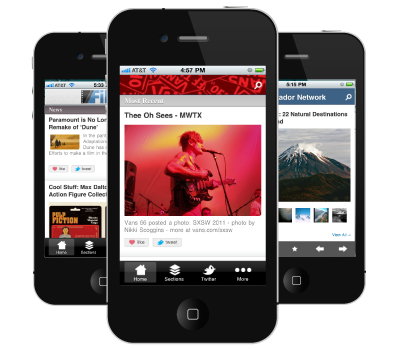
Ever dreamed of an app that works in all devices and operating systems? Creating a mobile app requires investment and resources, but with increasing number of players in the mobile space, app development has become even more complicated and expensive. Instead of one iPhone app, you need to decide whether you will also develop the same app for other operating systems, such as fragmented Android and emerging Windows OS.

But there is hope. HTML5.

New technology with increasing potential

According to Michael Mullany, VP of marketing and products at Sencha, already 95% of the functionality of native apps is being delivered by HTML5, and the new technology will emerge competitive on just about every level within two years. Meanwhile, research firm Strategy Analytics forecasts 1 billion HTML5 compatible phones to be shipped in 2013 (up from 336 million in 2011), which has provoked interest among big players such as Facebook and Google.

In addition, Financial Times surprised the market last year by withdrawing FT iPhone app completely from App store, and creating its own HTML5 app instead. Within only few months FT managed to migrate 1 million of its mobile users from its native mobile app to the browser-based version. Currently 20% of total page views and 15% of new B2C subscriptions are coming directly from mobile and tablet devices. Quite impressive.

What is an HTML5 app?

HTML5, also called “the flash killer”, means a fifth generation of coding language that is used to create web pages. It gets to bypass phone’s hidden components that in the past have forced developers to create a specific app for each OS. This means that instead of creating various versions of the apps for different OS and devices (iPhone OS, Android, Windows…), by using HTML5 companies are able to develop one mobile / tablet app that is suitable for any device or operating system.

HTML5 app benefits and challenges

Main benefits: cost savings and accessibility. Besides huge savings on mobile / tablet app development costs, you are not restricted by terms and conditions and do not require anyone’s permission to distribute an HTML5 app. It means that there is no 30% cut of app revenue, which happens with apps sold via native platforms. HTML5 apps are also searchable by search engines such as Google, which expands their reach beyond native app stores such as Apple’s App store and Google’s Android market.

Main web and mobile browsers support HTML5 and most of its features are able to run on low-powered devices such as smartphones and tablets. However, even if HTML5 has been improving fast there are still some limitations such as speed, access to certain phone features such as Bluetooth, and inability to handle the intensity of graphics performance for maps and fast-moving games as well as native app. What also is required for HTML5 to really kick off is an effective distribution channel for the HTML5 apps, user feedback system, and simple and secure payment channel. In general, quality of the apps may also not be up to same standard if there is no central quality control.

Should our business invest in native or HTML5 apps?

If the aim is to develop a graphic fast-moving game or location-based app using maps – maybe not. If the aim is to develop an engaging mobile app that does not require necessarily fast internet connection, HTML5 apps can make life less complicated. Instead of a long process of creating, testing and approving many versions of the native app for different operation systems, company can concentrate on one mobile app that is suitable for most of the devices. This allows us to invest more time and resources in something more important, such as building a proper mobile strategy, instead of running around like headless chickens focusing on small details instead of the big picture.

To be honest. If we have a possibility to produce something that most of the people can access while making considerable time and cost savings – shouldn’t we?

Mobile Marketing Trends: Facebook Focusing on Mobile in 2012. Finally.

February 2nd, 2012 No comments

It took a while, but Facebook has finally – at least officially – identified mobile as “critical to maintaining user growth and engagement over the long term.” The global social media platform acknowledged that users are moving from PCs towards mobile Facebook access, and admitted that “if we are unable to successfully implement monetisation strategies for our mobile users, our revenue and financial results may be negatively affected.”

 Growing International mobile advertising market

 According to experts, global mobile advertising market is experiencing an annual growth rate of 64% and is expected to reach 17.6 billion US dollars by 2015. This might be the main reason, instead of the user engagement, why the social networking company is so interested in mobile market. In fact, Facebook’s biggest revenue channel is advertising, generating 85% of sales in 2011. To put it in perspective, Facebook’s revenue accounted for 3.71 billion US dollars in 2011.

Surprisingly, Facebook is not currently generating profit directly through the Facebook mobile products and it has not been advertising via mobile. The social media company revealed that this is going to change and that they “may have potential future monetisation opportunities such as the inclusion of sponsored stories in users’ mobile News Feeds.” I am not sure how the Facebook users are going to react, but users’ reaction seems to be one of platform’s smallest concerns, especially taking in account the recent changes, privacy issues and the polemic regarding the timeline.

 Global Facebook mobile usage

 But how many users are currently accessing Facebook via mobile? According to Facebook, more than 425 million monthly active users (MAU) were utilizing its mobile products in December 2011. This has great significance since in total the platform has 845 million monthly active users and it seems unbelievable that the social networking company has not realized until now the potential mobile marketing has.

Company is forecasting the mobile user rate to grow even faster than the MAU, which has been increasing annually 39%. This may very well be possible. According to a recent ComScore study, 55.1 million European mobile users accessed social networks or blogs via mobile devices in September 2011 only, representing 23.5% of the total mobile audience. Not only did the mobile social media usage nearly double, but 47% of the users accessed social networks and blogs daily.

Challenging global mobile market

 Facebook might have a strong position in International online market, yet the global mobile market is full of competitors and challenges. The social networking company admitted that it is dependent on different mobile operating systems they do not control, such as iPhone OS, Windows OS and of course … Google’s Android.

 Until recently we were experiencing Apple smartphone domination, yet things are changing. Industry analysts are predicting that Windows Phone will increase its market share up to 16.7% by 2015, while Apple’s market share will decrease from 18% percent to 16.6% by 2015. Meanwhile Android is expected to grow from 47.4% to 58.1% by 2015.

 There are several reasons for the change. One is Nokia’s powerful partnership with Microsoft, which has resulted for example in a successful Lumia mobile. Other is Android’s massive volume of devices. Even if the Android OS is fragmented and constantly changing, Apple takes its time to launch a new expensive new iPhone / iPad, while hundreds of Android powered mobiles arrive in stores across the globe in a year … and with a cheap price.

Facebook / Apple mobile partnership?

Facebook has a problem. It is planning to step into the mobile game, however its 425 million MAUs have already an existing Facebook app, there are many competitors in location-based services, social networks, games and deals, and the social networking company does not have any control over mobile OS. Apple on the other hand is losing its market share rapidly while Android OS is growing fast.

One interesting possibility the two companies have is augmented reality. According to Juniper, by 2015 global revenues from AR will reach 1.5 billion dollars. ABI Research estimated that even if in 2010 revenue from Augmented reality was only 21 million dollars, amount might very well increase to 3 billion dollars by 2016. But it gets better: AIB claims that revenues related to Augmented reality will increase from 6 million dollars in 2009 to more than 3.5 billion dollars in 2014 – which signifies a yearly growth of 97%.

What this has to do with Apple and Facebook? Apple has acquired recently Polar Rose, a company which has created facial recognition software and other elements that enable the “automatic creation of events based on visual cues in images.” This brings enormous possibilities in social networking area, which should interest Facebook. Apple has the iPhone OS and technology, and Facebook its Facebook Places and large user base perfect for the newly acquired facial recognition. If these two companies join forces they can very well have a chance to compete with Google. Actually these two combined could possibly even be very, very dangerous for Google.

Facebook and Google do not like each other. Apple and Google do not like each other. What would be a better partnership than ganging against a common enemy?

Search Plus Your World: Google Finally Integrates Search & Social

January 15th, 2012 No comments

Will 2012 be the year of Google?  Android continues eating Apple’s pie across the world, Facebook’s constant changes drive frustrated top influencers to Google+, Google analytics is  the most widely used web analytics tool with market share of 80%, and Google continues in its no. 1 position in search.


Google search: where are we right now?

Google has come a long way. Few years back the search giant was reluctant to invest in social, especially after not so successful attempts with Orkut and Google Buzz. Yet step by step the company has become more ambitious and seen the potential social has.

  • 2009: Personalized Search : Ranking based on user’s history, clicks and location
  • 2009: Social Search : Results based on user’s social connections
  • 2010: Google Real time:  Integration of Twitter feed into the results
  • 2011: Google Plus: Google social network + addition of Google+ pages for business
  • 2012: Search plus your world: Personalized, Social, G+ and authors in the search result

What is “Search plus your world”?

Search plus your world is Google’s attempt to finally unify the search, social and its own G+. It means that Google has integrated the algorithm of social search, personal search and personalized search in one algorithm. This latest addition in search mix finds the content that the users shared in Google plus (photos, videos, posts, articles, etc.) together with the traditional web content. To search information of a contact, you only need to search for it in Google and you will get the social network results first.

The change to the algorithm has already been implemented, but at the moment it is only visible for people who are logged in Google.com and do their search in English. Google is planning to roll it out shortly to the rest of the world.

How Search plus your world will influence SEO?

Let’s be honest. Google owns 90% of the global search market so if Google says jump, we jump. So if Google says we need +1 buttons and a G+ page to improve our ranking, so be it. Logically, not only Google will show personal Google+ results for users, but the search engine ranks higher the pages that feature +1 recommendations and +1 also appears both in the paid and natural listings. As with Facebook “like” button, +1 is a social proof that the content is worth seeing and sharing. More recommendations you have, more likely users are going to click your page (and more likely Google is going to like it…sorry I mean “plus” it).

A very important change in the new search is that the personal results will appear first. How does this affect traditional search? Well, let’s say that if first 10 results are personal, they will already kick the traditional search results from the first page. Annoying!

What comes to Adwords, some experts say that Google is stupid to play with its biggest income channel and the change may be negative for the search giant. Yet when you think about it – if your real ranking is out of your control and depends on random users and their opinions, how much are you ready to pay to secure your place on top? The change might actually  push the Adwords bids very high creating more income for Google.

Regarding Adwords’ look and feel, I am curious to see what Google will do because the way they appear right now is likely to be different compared to the personal results. Maybe Google will create its own version of Facebook’s “sponsored stories”. Let’s see.

Goodbye Google ranking?

 Some people say that this is the death of Google ranking. Not necessarily, but it means that we have to stop focusing only in numbers, excel sheets, visits, clicks, conversions and results.We have to start concentrating also in people.

It is true that right now the effect is still very small, since penetration of Google plus is still low. You may think that it does not really matter that people see personal, social results when at the moment not so many of the users are in Google+. Maybe, but in the future it will. Therefore it is a good idea to start thinking about your Google+ strategy, to set up a Google+ page for your brand, and to start building your fan circle. Once the social results start to matter, you already will have a fan base and plenty of +1 recommendations to stay on the first page.

Meanwhile, it is not worth ditching the current SEO strategy and efforts. Google’s search project sounds good, but at the same time it has few downfalls. First of all: privacy issues. With the new search whatever we do in Google+ is visible in Google search for our family and friends, and if people add Google+ friends as carelessly as Facebook friends this might have serious implications. Secondly, Google is about relevancy, but what my friends (bless them) say in Social Media is not always very useful. This might alienate users from Google search and they might start preferring other search engines.

Let’s see if Google’s sneaky plan to integrate personalization, social and G+ into search will be successful, or whether it will be like many of its projects: ambitious … but rubbish.

Is Social Media Killing the Traditional Purchase Funnel?

January 9th, 2012 1 comment

Back in the days it all seemed very easy. By identifying where people were in the purchase funnel (awareness, familiarity, consideration, purchase and loyalty), marketers were able to identify cool, warm and hot prospects and lead them down the funnel to the sale. Clear step by step customer acquisition journey that made sense. A basic marketing rule that has been respected for decades.

But let’s face it: the world we knew back then has changed. With the exponential growth in technology, mobiles, Internet, social media and search, even the way we look at the world has changed. We marketers have changed, consumers have changed and the ways brands engage with the consumers have changed.

So why the way consumers buy our products would not have changed?

Different consumer decision journey

 According to consulting firm McKinsey, traditional funnel is dead and has been replaced with a different model called Consumer Decision Journey.

“It’s taking a fundamentally different view of what’s going on in consumer behavior”, claims David Edelman, partner and co-leader of McKinsey’s global digital marketing strategy, “What we have seen in sector after sector is that this [funnel] is not what’s going on; we need to reframe the consumer decision journey to something more iterative, circular and more about what the consumer is actually doing. And marketing needs to be about helping customers through that journey.”

Source: McKinsey & Co

Social media, consumer forums and brand advocates play a very important role in this purchase process model. Consumer tries or buys a product, tells the world about it, and triggers other consumers interests who will then evaluate different options on and offline and compare brands before buying the product.

What is interesting in this model is that since consumers are constantly evaluating different possibilities, they are in a continuous journey where they regularly add and drop brands. It is a loop, which means that the communication should not only focus on awareness and end sale, but also in consumer engagement and consumer loyalty. More happy customers the brand has, more advocates, positive comments and evaluations it has. Which then lead to more potential customers.

How to engage with the customers during their journey?

McKinsey has identified four ways companies could use to engage consumers during their journey:

  1. Align – instead of using all resources for “consider” and “buy” stages, companies need also to focus on “advocate” and “evaluate” stages. This means that marketers need to stop ignoring consumer forums and encourage clients to rate their product/service or write their opinion about it. Amazon is a great example of the power consumer opinions and data brings.
  2. Link – Communication and brand message across all channels from offline to online needs to be consistent. If the core message and brand identity differs, consumers get confused. And confused customers are not happy customers.
  3. Lock – Companies should “lock in” a customer’s attention via direct, opt-in channels, such as Twitter, Facebook, email and apps. It does not mean sales talk, people who follow you are usually your fans and deserve interesting and relevant content. Other consumers following you are all potential customers who also deserve engaging content that does not only push sales, but asks their opinion and makes them feel special at every stage of their journey.
  4. Loop – As mentioned, the journey is a loop. To improve the loop it is very important to measure data and evaluate the response to the content. If you do not know the results, how can you improve your marketing strategy and communication?

Is traditional purchase funnel dead?

Dead is a strong word. I think the consumer purchase journey has only transformed and become more advanced and adapted to the modern times. The basics steps are similar, but the model highlights the importance brand advocacy has especially on these disloyal times. We are surrounded by excessive choice, have become suspicious and picky, and search for other consumers advice before choosing the right product for us.

Word of mouth and post-purchase customer service have always been important, but often forgotten from the marketing mix. Yet the truth is that ever since consumer was able to speak with the world via Internet and reach not only his family but hundreds of thousands of people, his power has skyrocketed. It would be foolish to ignore it.

Whether you call it customer decision journey or purchase “loop”, this model should be an eye opener for those who stick to the old world and the old models. The world has changed. Welcome to 2012.

Europeans Addicted to Social Media: 47% of the Mobile Users Access Social Networks Daily

November 24th, 2011 No comments

Social Media, Social Networks, Social Commerce … there is no escaping social these days especially after the launch of Google+. We communicate with the consumers via wall posts and tweets, build our business network in LinkedIn instead of meeting face-to-face and handle customer service via Twitter. But maybe we are right to become so obsessed with Social Media.

According to an European comScore MobiLens study, the mobile social networking has increased  44% in France, Germany, Italy, Spain and the UK during 2011. What is even more interesting is that more than 40% of the European Mobile Social Networking users are engaging with brands.

 Snapshot of the 2011 European mobile market

  •  UK and Spain are leading countries in Smartphone usage with 46.9% and 46.3% penetration respectively, compared to the European average of 40.1%. Germany has the lowest Smartphone penetration with 33%.
  • British and Spanish mobile users also use non pre-installed apps above European average of 34.5%, UK with 44.9% and Spain with 35.4%. Germans have the lowest percentage with 30.4%.
  • 46.9% of the mobile users in the UK and 35.3% in France use browser, compared to the European average of 35%. Germans users browse the least with 28.4%.
  • 33.8% of the British , 30.1% of the Italian and 28.7% of the Spanish users play mobile games, compared to the European average of 26.5%. French users play games the least with 15.6%.
  • Sending text messages is the most popular mobile activity across all five European markets, the average reaching 82.9%.
  • 32.6% of the Spanish mobile users listen to music, above European average of 25.9%. Only 23.3% of the French use mobile to listen to music.
  • 35.1% of the UK mobile users access news, way above European average of 18.5%. Germans are the least interested on news, with 15.7%.
  • 35.1% of the UK mobile users access social networks and blogs well above average of 23.5%. Germans were the least social with 17.3%

 Increasing mobile social network addiction

 55.1 million European mobile users accessed social networks or blogs via mobile devices in September 2011 only, representing 23.5% of the total mobile audience. Not only did the mobile social media usage nearly double, but 47% of the users accessed social networks and blogs daily.

“Over the past year we have seen social networking use grow rapidly among mobile users across Europe, driven largely by the growth in smartphone adoption, making it easier than ever for users to stay connected and engage in social activities while on-the-go,” stated Jeremy Copp, comScore Europe vice president for Mobile. “More notably, the rate of growth in daily social networking usage has surpassed even the rate of growth in total social networking adoption among mobile users, suggesting that the behavior is becoming even more ingrained into people’s daily mobile lives. As social networks continue to invest in improving the user experience on mobile devices and tablets, it will be interesting to see how social behaviours on the mobile platform further evolve.”

 Interestingly, while most of the European mobile users accessed social networking sites via browser (31.3 million), the usage of social network mobile apps doubled to 24.2 million.

Mobile Social Networking Activities

Finally good news for marketers: 44% of the mobile social networking users admitted reading posts from brands and about 27% reported receiving offers, coupons or deals on their mobiles.

 What comes to other activities, 74% of the users read posts from people they know and 62% updated their status. Peer recommendation also has an important role with 35% of the users posting links to websites and 49% of the users following posted links to websites.

Leading European mobile social networks

In 2011 Facebook increased its European mobile audience 54% up to 39 million. This represents 71% of the EU5 mobile social networking audience positioning Facebook as a clear leader. However, even if the social network gathered the most users, it did not experience as big growth as its competitors: Twitter grew its mobile audience 115% up to 8.6 million, 2.2 million unique users accessed LinkedIn increasing network’s mobile users by 134% and the Spanish social network Tuenti grew by 60% gathering 2.3 million unique users.

Go social, think local

The results highlight the importance of Social Media in European brand communication strategy. With localized mobile site and social network pages brands can increase user engagement and user referrals, and the little snapshot of the social media activities can provide some insight to the best tactics in each country. While building a game app seems to work in the UK and Spain, a mobile game might not be very successful in France.

Reaching European audience is tricky because of the different languages, cultures and customs, but for brand to engage with the European audience, social media seems like a good starting point.

Social Networks: Once Your Business is on Facebook, Can You Survive Without It?

November 17th, 2011 1 comment

After the recent launch of Google+ pages, companies and marketers around the world are debating whether it is worth investing money and time in another social network especially taking in account the effort an international social media strategy requires. On the other hand, there has also been discussion whether it would be worth ditching the website and replacing it with a Facebook page.


It takes a bit of convincing to encourage top managers to invest in social networks, but once you have started, engage successfully with your audience, and see referrals and leads coming in – are you able to stop?

Growing dependency on Social Network platforms

How dependent are we on social networks? Many companies are using Twitter for customer service, communicate with consumers through Facebook newsfeed rather than newsletters and news articles, and promote in TV commercials their Facebook page instead of the official site. Also, in place of the own database acquired via website, brands are directing the communication to databases owned by social networks.

For some companies, such as Zynga (FarmVille, Mafia Wars), the situation is a bit more complicated. Even if the interconnected business model has allowed the social gaming company, which has 60 million active users in 166 countries, to grow faster, it is highly dependent on Facebook’s platform and user base. “We generate substantially all of our revenue and players through the Facebook platform and expect to continue to do so for the foreseeable future. Any deterioration in our relationship with Facebook would harm our business”, says Zynga’s IPO. This means that despite Facebook policy changes that have been negative for the business, Zynga cannot leave the platform in close future even if it would try to diversify to other networks, such as Google+.

Co-dependent Business Model

According to Kevin Werbach, a Wharton legal studies and business ethics professor, Zynga’s dependency on Facebook could show a preview to a dominant business model for the future digital world, that revolves around what he calls “real-time value webs.”

“We’re seeing that model play out today with the rise of digital platforms such as Facebook, Google, Apple and Amazon.com. They are offering services to customers directly, but also providing the infrastructure for ecosystems of other companies,” Werbach states. “In a digital era, everything is potentially interconnected. Companies are no longer isolated islands.”

It is not obvious whether in five years the users will still visit the company websites or whether they will only use social networks and apps to check the latest news and offers. The social networks have re-designed and developed their businesses as platforms, and offer a starting point for emerging companies willing to grow fast. The same trend goes beyond social media: app developers are reliant on iPhone OS and Android, and Japanese app developers are dependent on cell phone carrier NTT DoCoMo.

Worldwide Social Network referrals

But which social network brings the most traffic? In Q3 2011 Facebook was the biggest traffic driver worldwide with 63.5% of the social network referrals, while Google owned Youtube followed it with 21.2% of the referrals.

Twitter and StumbleUpon followed with 6.3% of the social media referrals each, Reddit drove 1% of the traffic to the websites, but Google+ only reached 0.2%. However, to put it in perspective, even if the new social network was launched just few months ago, Google+ brings 2 times more referrals than Delicious, 4 times more referrals than Flickr and 6 times more referrals than Mashable.

The small amount of Google+ referrals might also be due to the lack of brand presence and brand pages on the platform, and the situation may change in few months since Google has now enabled Google+ pages for companies. The power balance is likely to get even more interesting, since according to Spotify investor and former Facebook President Sean Parker, the influencers are now leaving Facebook and moving to other social networks.

Dependency between Social Networks

Despite of the fierce competition between different social platforms, interestingly there seems to be also certain dependency between the  networks. For example, 28% of the traffic to Google+ comes from other social networks. To put this in context, 6% of the users go to Facebook from other social platforms and 22% of the traffic arriving to YouTube comes from social. Twitter has the highest dependency compared to other social sites with 32% of its traffic coming from the other social networks.

It might be that in the future companies and social networks become so interconnected that neither can survive without each other. Or then we hopefully find a more convenient business model.